AI for journalists: interviews, quotations and source checks.
Clean interview transcripts, organize a reporting evidence table and draft a story from your sources. Keep quotations, attribution and unanswered questions close to the copy as the story develops.
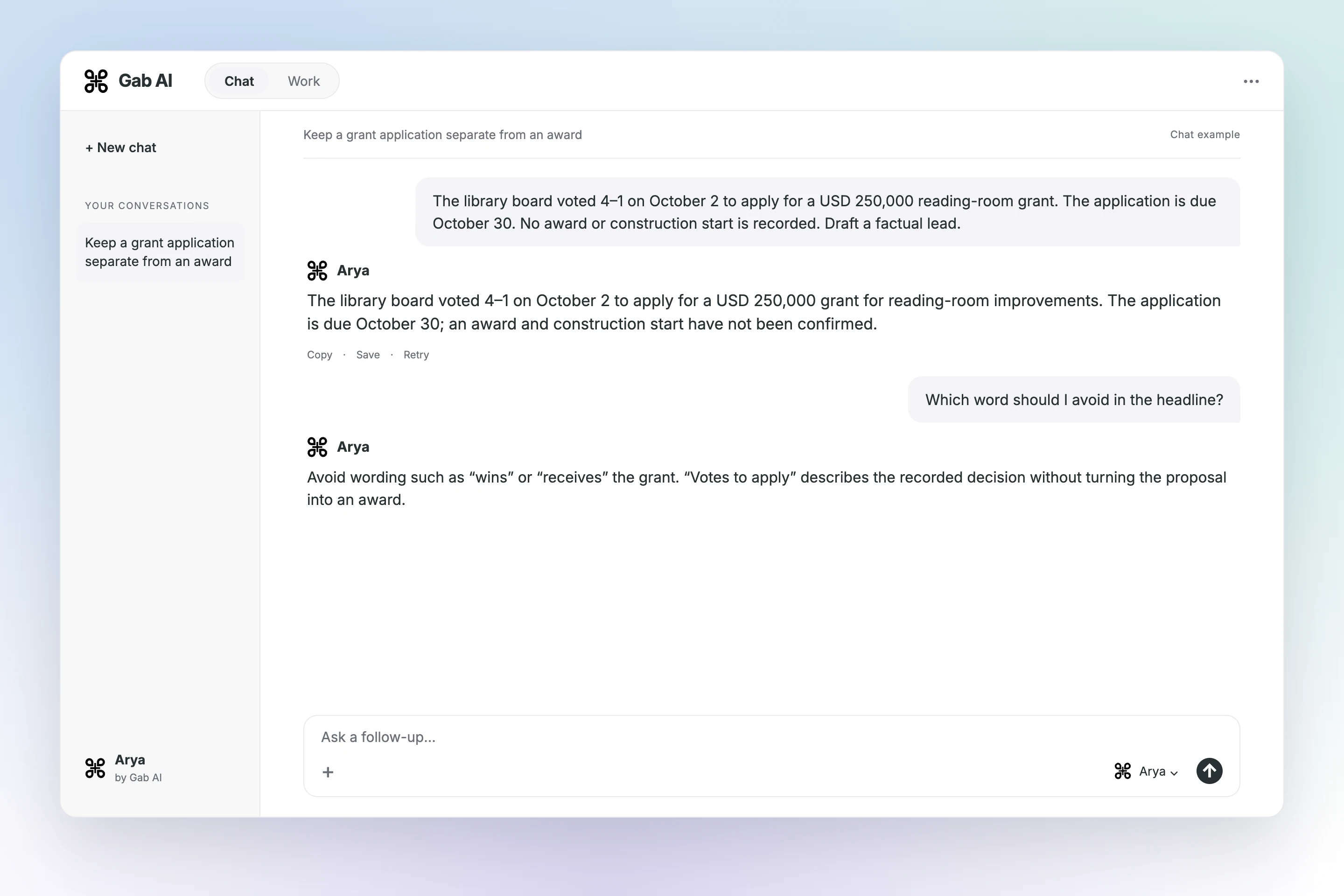
The library board voted 4–1 on October 2 to apply for a USD 250,000 grant for reading-room improvements. The application is due October 30; an award and construction start have not been confirmed.
Your follow-up
Which word should I avoid in the headline?
Arya
Avoid wording such as “wins” or “receives” the grant. “Votes to apply” describes the recorded decision without turning the proposal into an award.
Ask about the part of the story that is still unknown
Turn gaps in the grant proposal into specific questions about funding, timing and reader access.
1. What determines whether the application can move forward?
2. Who will confirm the improvement scope and timeline if funding is awarded?
3. What will readers be told about access during any work?
Your follow-up
Keep the first question more specific.
Arya
What must the library confirm before the October 30 application deadline, and who is responsible for each remaining decision?
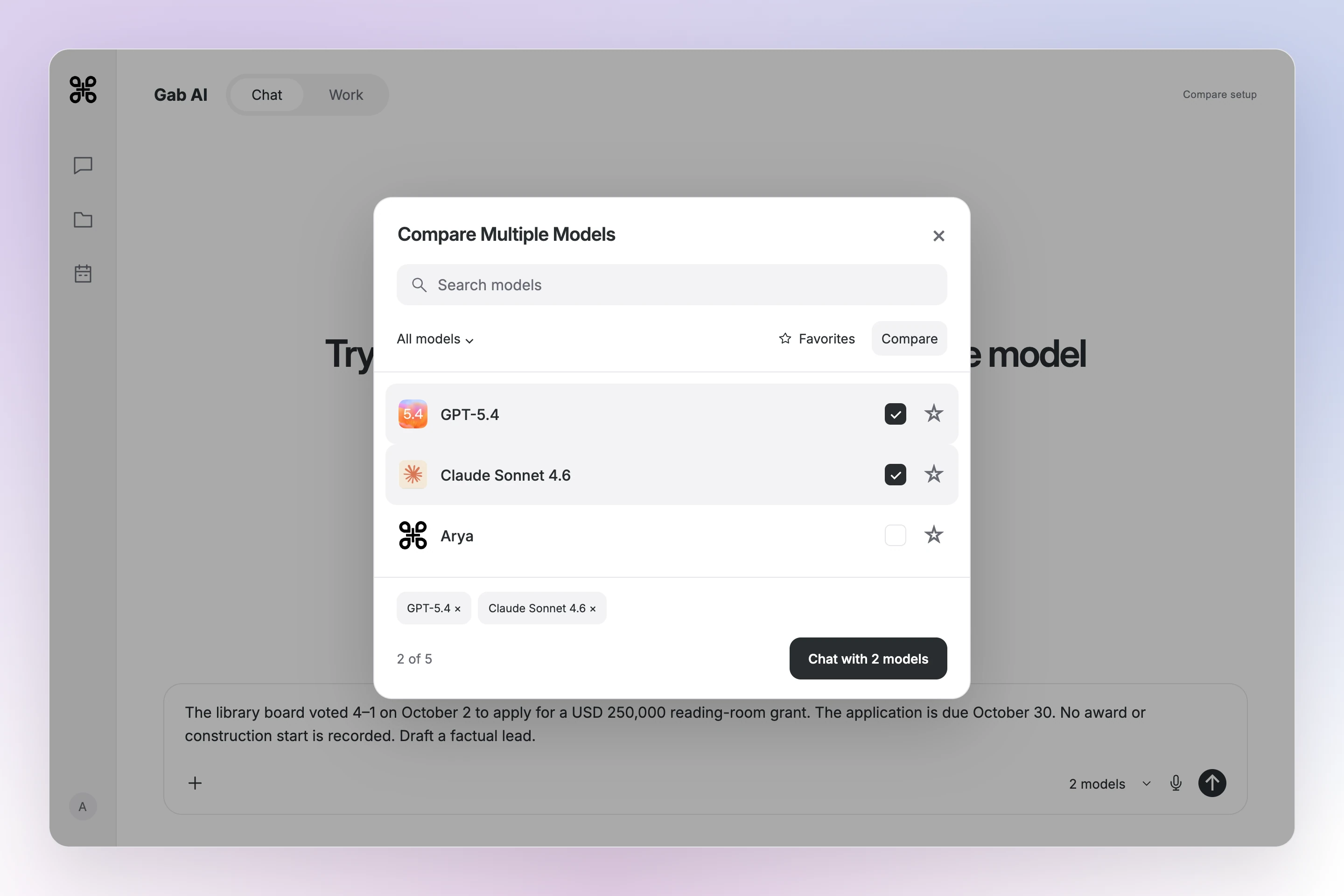
Try the same question with more than one model
Choose compatible models, compare their reasoning and decide which answer helps with your task.
In the model picker, turn on Compare and choose compatible models before sending the same prompt. Compare requires Plus; model access and credit use depend on the selection. Check facts and omissions rather than assuming a winner.
Clean up a transcript and trace a story to its sources
Clean a supplied transcript, test the claims against the records, and prepare a story with the unanswered interview questions still visible.
Clean the supplied library interview
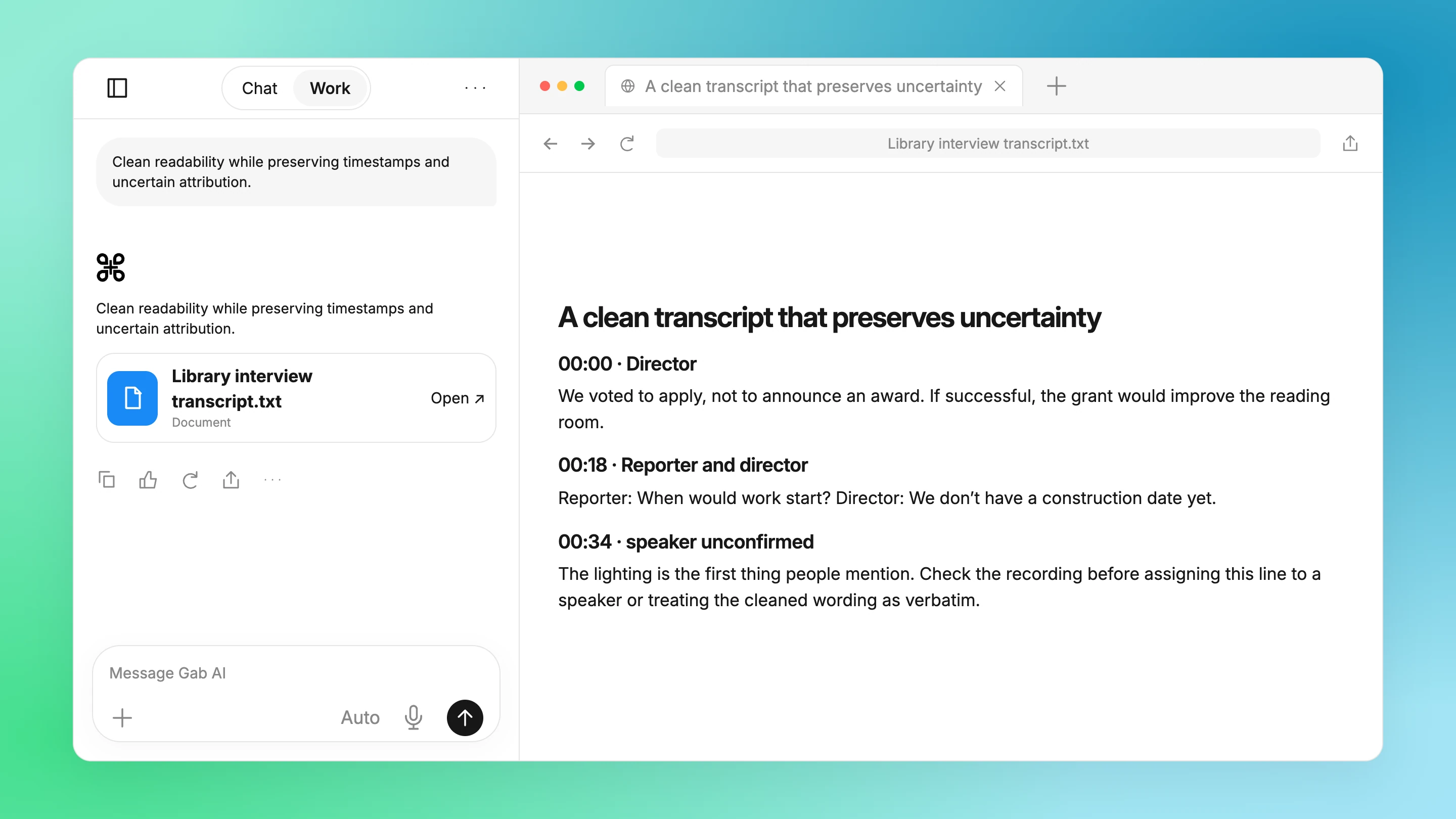
Clean readability while preserving timestamps and uncertain attribution.
Clean readability while preserving timestamps and uncertain attribution.
Loading…
This content could not load.
Your source material stays available.
A clean transcript that preserves uncertainty
00:00 · Director
We voted to apply, not to announce an award. If successful, the grant would improve the reading room.
Library-interview-rough.txt
View full example
00:18 · Reporter and director
Reporter: When would work start? Director: We don’t have a construction date yet.
Library-interview-rough.txt
00:34 · speaker unconfirmed
The lighting is the first thing people mention. Check the recording before assigning this line to a speaker or treating the cleaned wording as verbatim.
Library-interview-rough.txt
Fillers are cleaned for readability; timestamps and the unresolved speaker are retained.
DIRECTOR: We voted to apply, not to announce an award. If successful, the grant would improve the reading room.
00:18 · Reporter
REPORTER: When would work start? DIRECTOR: We don’t have a construction date yet.
00:34 · unclear speaker
[SPEAKER UNCLEAR]: The lighting is, um, the first thing people mention. Speaker identity needs checking against the recording; do not attribute this line to the director.
Build the library reporting evidence table
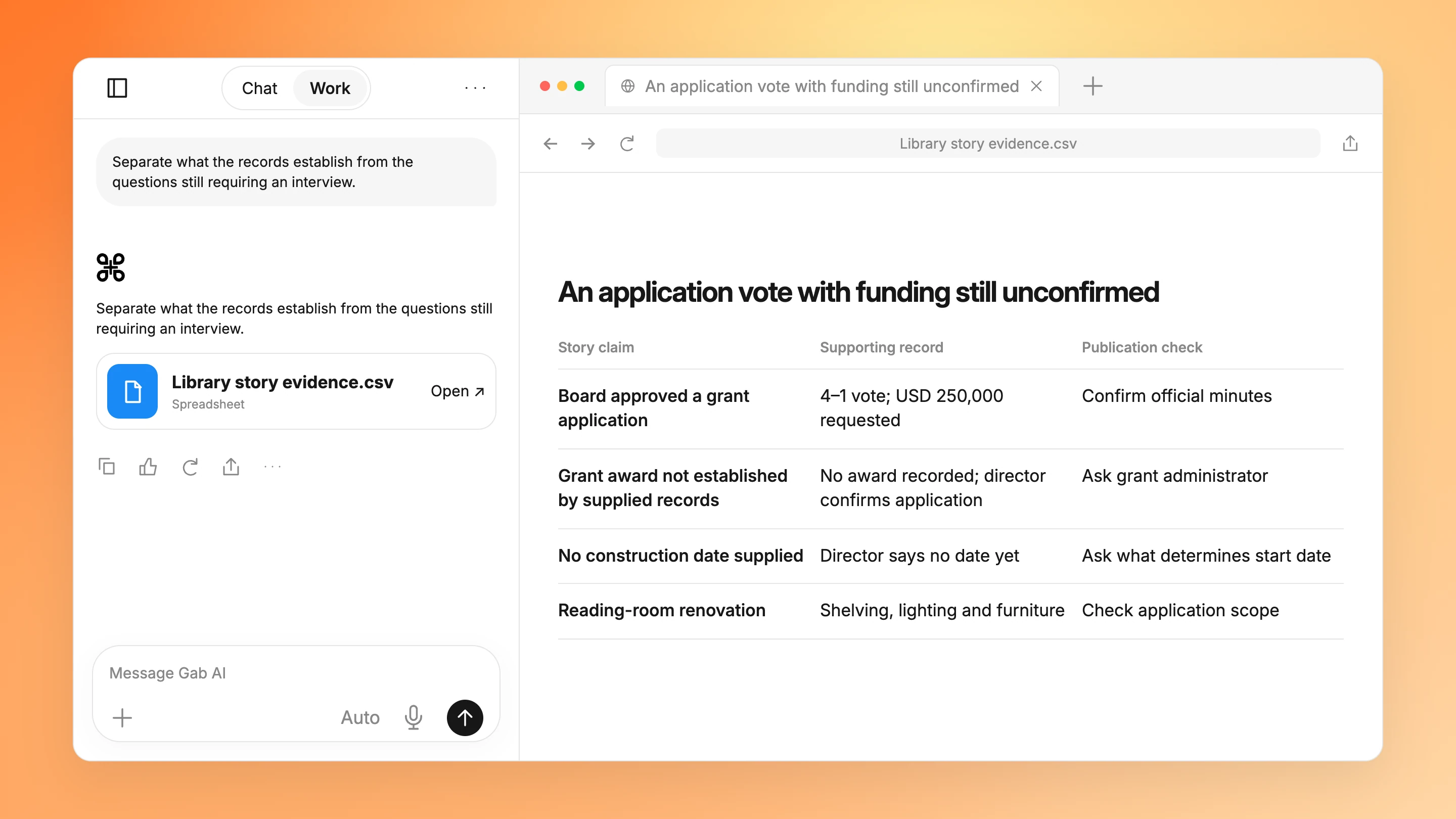
Separate what the records establish from the questions still requiring an interview.
October 2 meeting: board voted 4–1 to apply for a USD 250,000 reading-room renovation grant. The application is due October 30. No grant award is recorded.
Project scope
Proposal covers accessible shelving, lighting and furniture in the reading room. It does not include a building expansion. The library’s annual operating budget is USD 1.2 million; it is separate from the proposed grant.
Reporting sources
Available sources: these sample board notes and a supplied interview transcript. No grant decision, procurement documents or construction schedule is supplied. Confirm the official record and interview quotations before publication.
Library-interview-rough.txt
00:00 · Director
DIRECTOR: We voted to apply, not to announce an award. If successful, the grant would improve the reading room.
00:18 · Reporter
REPORTER: When would work start? DIRECTOR: We don’t have a construction date yet.
00:34 · unclear speaker
[SPEAKER UNCLEAR]: The lighting is, um, the first thing people mention. Speaker identity needs checking against the recording; do not attribute this line to the director.
Prepare the library grant story draft
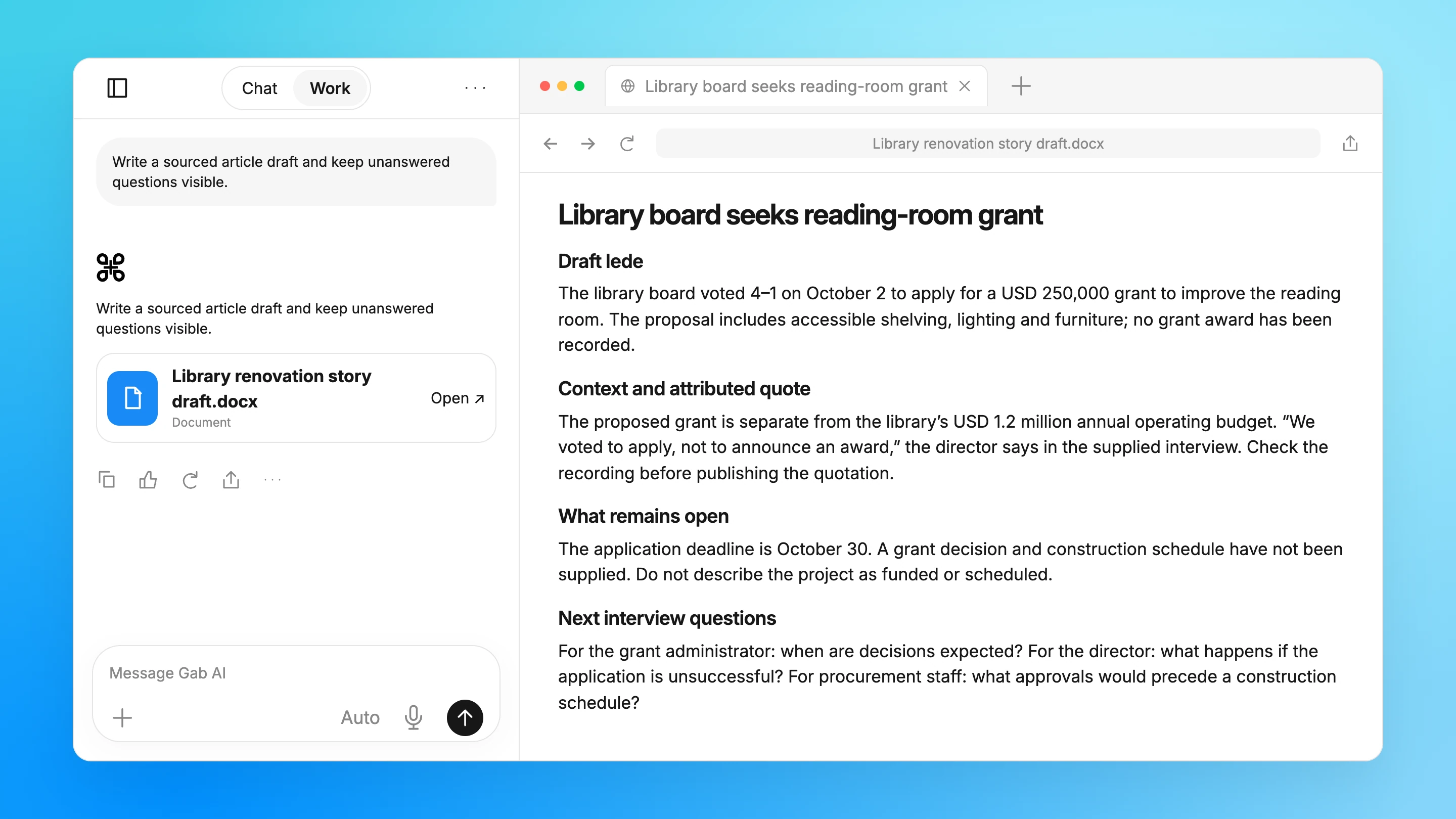
Write a sourced article draft and keep unanswered questions visible.
Write a sourced article draft and keep unanswered questions visible.
Loading…
This content could not load.
Your source material stays available.
Library board seeks reading-room grant
Draft lede
The library board voted 4–1 on October 2 to apply for a USD 250,000 grant to improve the reading room. The proposal includes accessible shelving, lighting and furniture; no grant award has been recorded.
Library-board-notes.txt
View full example
Context and attributed quote
The proposed grant is separate from the library’s USD 1.2 million annual operating budget. “We voted to apply, not to announce an award,” the director says in the supplied interview. Check the recording before publishing the quotation.
Library-board-notes.txt
Library-interview-rough.txt
What remains open
The application deadline is October 30. A grant decision and construction schedule have not been supplied. Do not describe the project as funded or scheduled.
Library-board-notes.txt
Library-interview-rough.txt
Next interview questions
For the grant administrator: when are decisions expected? For the director: what happens if the application is unsuccessful? For procurement staff: what approvals would precede a construction schedule?
Library-board-notes.txt
Library-interview-rough.txt
An inspectable article draft includes source notes and the next interview questions.
October 2 meeting: board voted 4–1 to apply for a USD 250,000 reading-room renovation grant. The application is due October 30. No grant award is recorded.
Project scope
Proposal covers accessible shelving, lighting and furniture in the reading room. It does not include a building expansion. The library’s annual operating budget is USD 1.2 million; it is separate from the proposed grant.
Reporting sources
Available sources: these sample board notes and a supplied interview transcript. No grant decision, procurement documents or construction schedule is supplied. Confirm the official record and interview quotations before publication.
Library-interview-rough.txt
00:00 · Director
DIRECTOR: We voted to apply, not to announce an award. If successful, the grant would improve the reading room.
00:18 · Reporter
REPORTER: When would work start? DIRECTOR: We don’t have a construction date yet.
00:34 · unclear speaker
[SPEAKER UNCLEAR]: The lighting is, um, the first thing people mention. Speaker identity needs checking against the recording; do not attribute this line to the director.
About these examples
Prepare transcripts, evidence tables and story drafts
Explore the sample deliverables, then open the workflow to inspect their inputs and evidence.
From the first question to useful work
Clean the supplied library interview
Clean readability while preserving timestamps and uncertain attribution.
Add the permitted transcript and your handling instructions before sending. Check quotations against the recording.
Read all source material
Library-board-notes.txt
Recorded vote
October 2 meeting: board voted 4–1 to apply for a USD 250,000 reading-room renovation grant. The application is due October 30. No grant award is recorded.
Project scope
Proposal covers accessible shelving, lighting and furniture in the reading room. It does not include a building expansion. The library’s annual operating budget is USD 1.2 million; it is separate from the proposed grant.
Reporting sources
Available sources: these sample board notes and a supplied interview transcript. No grant decision, procurement documents or construction schedule is supplied. Confirm the official record and interview quotations before publication.
Library-interview-rough.txt
00:00 · Director
DIRECTOR: We voted to apply, not to announce an award. If successful, the grant would improve the reading room.
00:18 · Reporter
REPORTER: When would work start? DIRECTOR: We don’t have a construction date yet.
00:34 · unclear speaker
[SPEAKER UNCLEAR]: The lighting is, um, the first thing people mention. Speaker identity needs checking against the recording; do not attribute this line to the director.
Prepare an interview transcript
Clean readability while preserving timestamps and uncertain attribution.
Refine reporting claims and quotation attribution
Compare the draft with a focused revision, keeping the source facts in view.
Try one focused revision
Suggested follow-up using the same source facts.
Focused follow-up
What change should I ask for?
Write a clearly labeled paraphrase, not an edited quotation. Preserve the difference between applying for a grant and receiving it.
Original excerpt
What does the existing example say?
We voted to apply, not to announce an award. If successful, the grant would improve the reading room.
Suggested revision
What could that revision look like?
Paraphrase: The library voted to apply for a grant that, if awarded, would improve the reading room. The statement does not announce a grant award.
Use Chat to discuss the request and refine the result with follow-up questions.
Deliverable: Reporting plan
What to provide
Story question, known facts and original source material
Example prompt
Help me plan reporting on this story question. Separate verified facts from allegations, identify documents and people to consult and draft neutral questions. Do not invent source answers or present accusations as established findings.
What to check
Confirm facts with original sources
Verify quotations and permissions
Complete editorial review
Work
Clean the supplied library interview
Fillers are cleaned for readability; timestamps and the unresolved speaker are retained.
Use Work to create and revise the editable Library interview transcript.txt with the supplied source files.
Deliverable: Library interview transcript.txt
What to provide
Library-interview-rough.txt: Purpose-written transcript excerpt; not the output of a speech-recognition run.
Example prompt
Create Library interview transcript.txt from Library-interview-rough.txt. Preserve speaker labels and timestamps. Mark unclear speakers and words instead of guessing. Keep a distinction between cleaned text and verbatim quotations. For an audio recording, first transcribe the attached recording and flag uncertain sections for review.
What to check
Inspect the original inputs
Verify facts, totals and assumptions
Review before sharing or publishing
Work
Build the library reporting evidence table
A claim table keeps the application, funding status and timeline distinct.
Use Work to create and revise the editable Library story evidence.csv with the supplied source files.
Deliverable: Library story evidence.csv
What to provide
Library-board-notes.txt: Purpose-created meeting record for a reporting demonstration.
Library-interview-rough.txt: Purpose-written transcript excerpt; not the output of a speech-recognition run.
Example prompt
Create Library story evidence.csv from Library-board-notes.txt and Library-interview-rough.txt. List claims, supporting passages and publication checks. Preserve application versus award, grant versus annual budget, and the unknown construction date. Include interview questions for missing evidence.
What to check
Inspect the original inputs
Verify facts, totals and assumptions
Review before sharing or publishing
Work
Prepare the library grant story draft
An inspectable article draft includes source notes and the next interview questions.
Use Work to create and revise the editable Library renovation story draft.docx with the supplied source files.
Deliverable: Library renovation story draft.docx
What to provide
Library-board-notes.txt: Purpose-created meeting record for a reporting demonstration.
Library-interview-rough.txt: Purpose-written transcript excerpt; not the output of a speech-recognition run.
Example prompt
Create Library renovation story draft.docx from Library-board-notes.txt and Library-interview-rough.txt. Use a clear lede, context, attributed quotation, source notes and interview questions. Do not announce an award or a construction date. Exclude the unconfirmed speaker’s line from attributed quotes. Keep the story as an unpublished draft.
What to check
Inspect the original inputs
Verify facts, totals and assumptions
Review before sharing or publishing
More prompts
Chat
Prepare an interview
An interview guide grounded in verified background and designed to clarify evidence.
Use Chat to discuss the request and refine the result with follow-up questions.
Deliverable: Interview question draft
What to provide
Verified guest background, reporting aim and topic boundaries
Example prompt
Draft interview questions from the supplied guest background and reporting aim. Include follow-ups that test evidence and clarify ambiguous statements. Flag background claims that need verification and do not fabricate biographical details.
What to check
Confirm facts with original sources
Verify quotations and permissions
Complete editorial review
Work
Build a story evidence table
An editorial evidence workbook with source links, contradictions and remaining reporting tasks.
Use Work to build and revise Story evidence table.xlsx from your source material.
Deliverable: Story evidence table.xlsx
What to provide
Documents, interview notes and approved handling rules
Example prompt
Create a workbook linking each proposed story claim to document/page references or interview notes, verification status, contradictory evidence and follow-up responsibility. Keep confidential sources redacted and do not treat an allegation as confirmed. Deliver "Story evidence table.xlsx" as the requested editable artifact. Ask for missing source material rather than inventing facts.
What to check
Confirm facts with original sources
Verify quotations and permissions
Complete editorial review
Work
Create an editorial story brief
A story brief with a sourced timeline and explicit boundaries around what has and has not been verified.
Use Work to build and revise Editorial story brief.docx from your source material.
Deliverable: Editorial story brief.docx
What to provide
Verified findings, approved quotations and editorial requirements
Example prompt
Create an editable story brief with the central finding, verified timeline, source notes and unanswered questions. Attribute quotations exactly to approved notes, avoid unsupported headlines and leave final publication decisions to the editor. Deliver "Editorial story brief.docx" as the requested editable artifact. Ask for missing source material rather than inventing facts.
Give Chat the story question, known facts and original source material. Ask for evidence gaps, source leads and neutral interview questions. Use the plan to guide your reporting, then verify the findings with the original records.
Can I build a story-evidence table in Work?
Supply permitted documents, interview notes and handling rules. Ask for a workbook linking claims to sources, contradictions and remaining reporting tasks. The draft does not contact sources or publish a story.
How should I review the library-reporting example?
Keep the vote to apply for a grant separate from an award: the notes record an application, not funding received. Check quotations against the recording, especially the line with an unclear speaker. The renovation scope and operating budget are separate facts; construction timing remains unknown.
How can I check an interview quotation against its source?
Keep the recording or original transcript beside the cleaned text. Check exact wording, timestamps, speaker identity and surrounding context before attributing a quotation. In the library example, the lighting comment has an unclear speaker and edited filler; it cannot be assigned to the director or treated as verbatim without checking the recording.
How do I avoid turning a grant application into an award claim?
Check the interview’s exact verbs and conditions. The director says the library voted to apply, with improvements conditional on success. Preserve the original quotation or label a paraphrase; do not describe funding as awarded. Verify the current status with the original reporting source before publication.
Can I start in Chat, or do I need Work?
Use Chat for questions and text drafts. Choose Work when you want a project with tools and editable files. Work requires Plus and uses credits; see Pricing for plans and allowances. Opening a draft does not send it or attach the example files.