AI for freelancers: proposals, scope and client decisions.
Turn a client brief into a freelance proposal, estimate the hours behind the scope and draft a reply about extra work. Keep deliverables and revisions clear before agreeing to a change.
I can scope a second direction as additional work. It would take the estimate from 10 to 13 hours, which exceeds my 12 available hours next week. Let’s agree scope and timing before I add it to the plan.
Your follow-up
Offer two options without promising a date.
Arya
We could keep the original direction and revision within the base scope, or review a separate estimate and timing for the second direction. Which option would you like me to price and confirm?
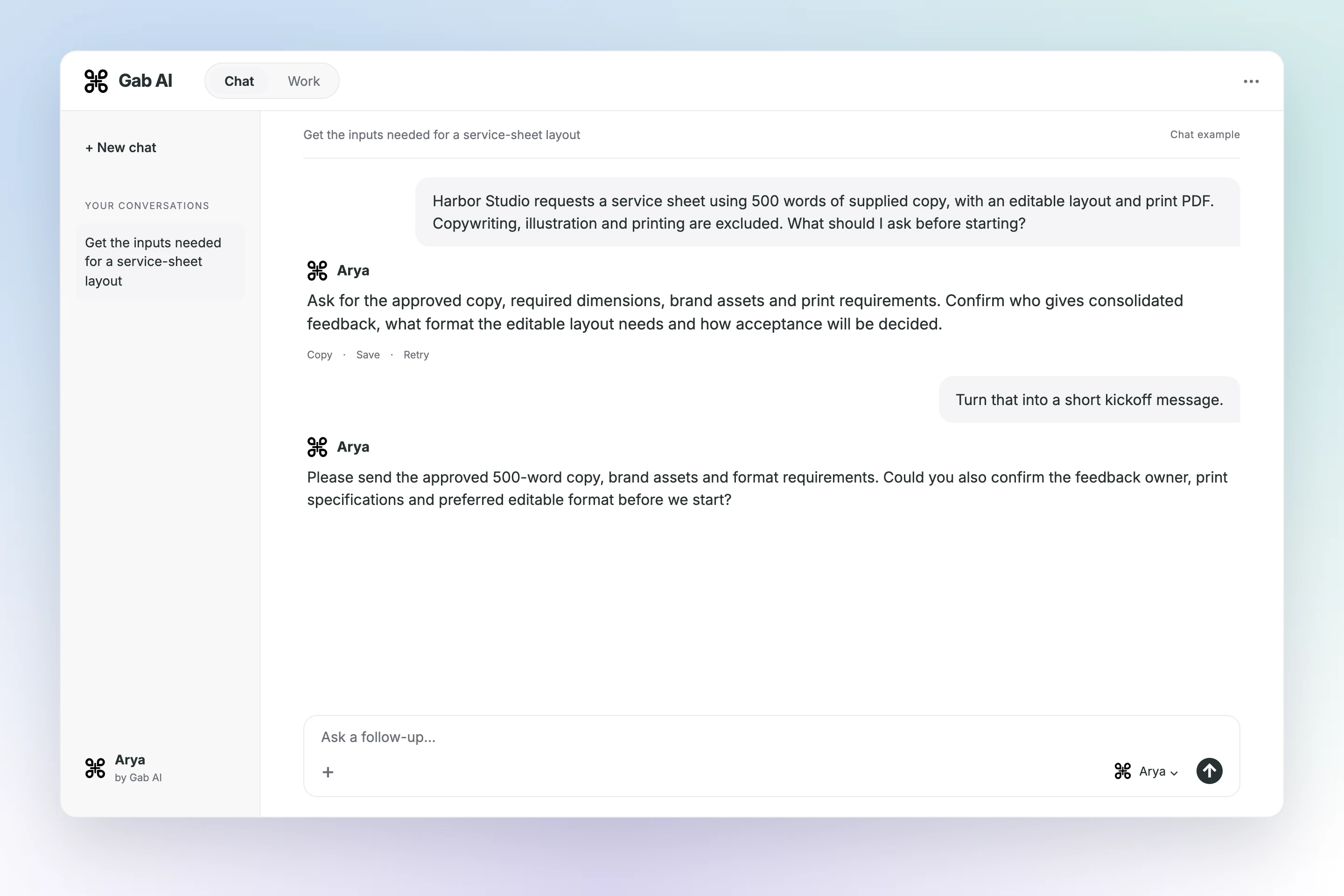
Get the inputs needed for a service-sheet layout
Ask for the approved copy, required dimensions, brand assets and print requirements.
Ask for the approved copy, required dimensions, brand assets and print requirements. Confirm who gives consolidated feedback, what format the editable layout needs and how acceptance will be decided.
Your follow-up
Turn that into a short kickoff message.
Arya
Please send the approved 500-word copy, brand assets and format requirements. Could you also confirm the feedback owner, print specifications and preferred editable format before we start?
Build a freelance proposal and respond to a change request
Turn a client brief into a reviewable proposal, check the effort behind the estimate and explain a change before promising delivery.
Turn a client brief into a scoped proposal
Inspect what is included, what is excluded and how an extra direction changes the estimate.
One service-sheet layout from 500 words of supplied copy, one direction and one consolidated revision round. Proposed delivery formats are an editable layout and print PDF. The sample file is the scope proposal, not those final client assets.
Harbor-one-page-client-brief.txt
Estimated work
2 + 6 + 2 = 10 hours. At USD 80 per hour, the base estimate is USD 800. Adding the second direction gives 13 hours and USD 1,040, exceeding the supplied 12-hour weekly capacity by one hour.
Harbor-one-page-effort-estimates.csv
Harbor-one-page-client-brief.txt
Before agreeing
Choose the base scope or approve the extra direction and a revised schedule. Confirm start date, delivery date, payment terms, tax treatment and acceptance arrangements separately. The option and terms are not accepted.
Harbor-one-page-client-brief.txt
Inspect the base and optional direction. Estimates, approval questions and exclusions stay together; no agreement is accepted.
Read the prompt and inspect the full example
Inspect what is included, what is excluded and how an extra direction changes the estimate.
Harbor Studio requests one service-sheet layout using 500 words of client-supplied copy. The proposed scope includes a brief review, one layout direction and one consolidated revision round. Deliverables: an editable layout and a print PDF. Copywriting, illustration, additional directions, printing and extra revision rounds are excluded.
Supplied commercial assumptions
The freelancer supplies an hourly estimate basis of USD 80 and 12 available project hours in the next working week. These are personal assumptions, not market rates. No start date, delivery date, payment schedule, tax treatment, acceptance deadline or accepted agreement is supplied.
Client change request
The client asks for a second layout direction. The freelancer estimates three additional hours at the same USD 80 hourly basis. This option has not been accepted. The client asks whether it can still fit the same week. No extra capacity has been approved.
Harbor-one-page-effort-estimates.csv
Base estimate
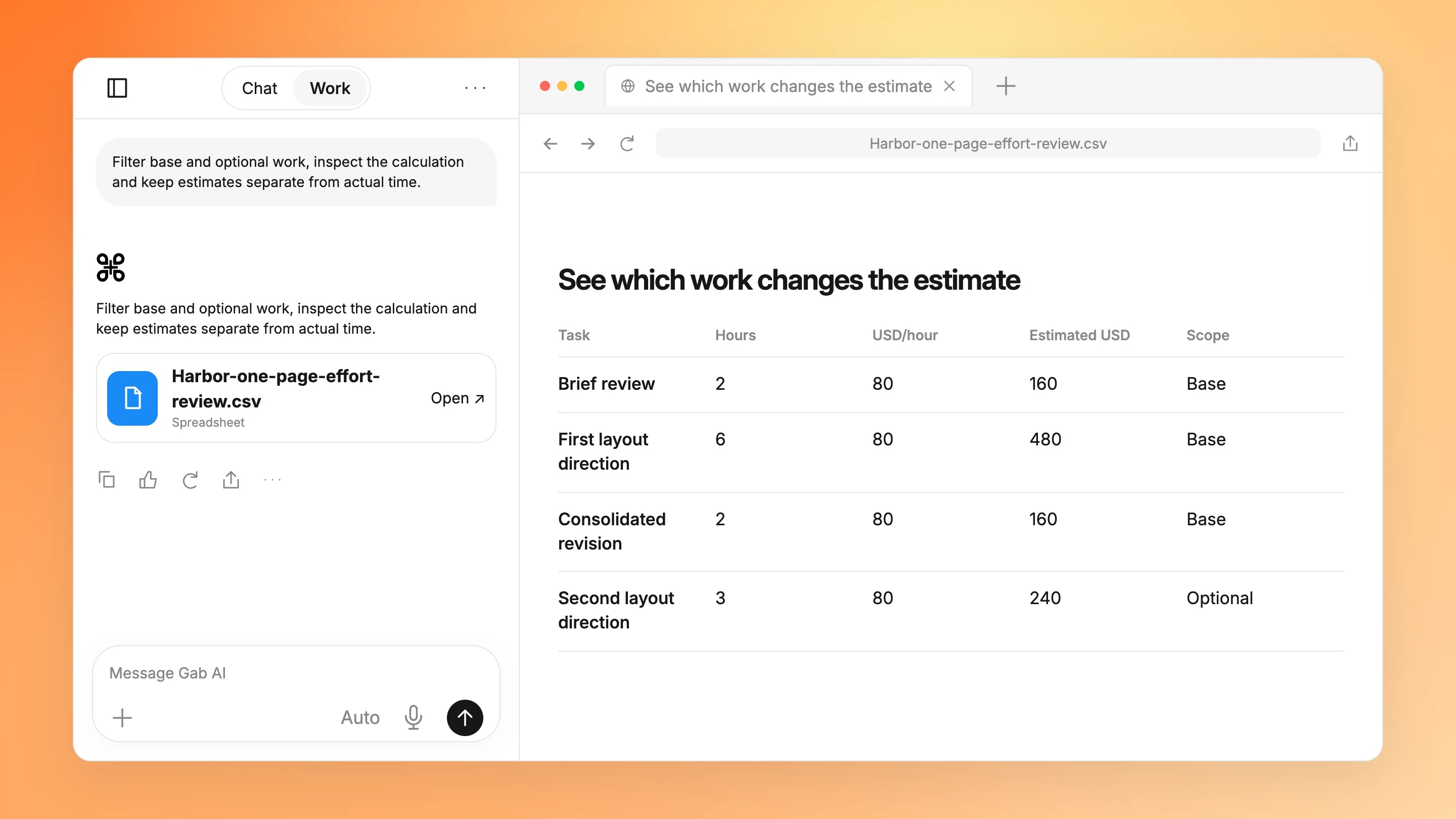
Brief review: 2 hours. First layout direction: 6 hours. One consolidated revision round: 2 hours. Base estimated effort is 10 hours. Each uses the supplied USD 80 hourly basis.
Optional direction estimate
Second layout direction: 3 additional hours at USD 80 per hour. It is optional work requiring approval; it is not part of the base scope.
Capacity and missing costs
Available project capacity is 12 hours in the next working week. Capacity is not a delivery-date commitment. Actual time, expenses, overhead and taxes are unknown; the estimate does not establish profit.
Check the effort behind the client estimate
Filter base and optional work, inspect the calculation and keep estimates separate from actual time.
Harbor Studio requests one service-sheet layout using 500 words of client-supplied copy. The proposed scope includes a brief review, one layout direction and one consolidated revision round. Deliverables: an editable layout and a print PDF. Copywriting, illustration, additional directions, printing and extra revision rounds are excluded.
Supplied commercial assumptions
The freelancer supplies an hourly estimate basis of USD 80 and 12 available project hours in the next working week. These are personal assumptions, not market rates. No start date, delivery date, payment schedule, tax treatment, acceptance deadline or accepted agreement is supplied.
Client change request
The client asks for a second layout direction. The freelancer estimates three additional hours at the same USD 80 hourly basis. This option has not been accepted. The client asks whether it can still fit the same week. No extra capacity has been approved.
Harbor-one-page-effort-estimates.csv
Base estimate
Brief review: 2 hours. First layout direction: 6 hours. One consolidated revision round: 2 hours. Base estimated effort is 10 hours. Each uses the supplied USD 80 hourly basis.
Optional direction estimate
Second layout direction: 3 additional hours at USD 80 per hour. It is optional work requiring approval; it is not part of the base scope.
Capacity and missing costs
Available project capacity is 12 hours in the next working week. Capacity is not a delivery-date commitment. Actual time, expenses, overhead and taxes are unknown; the estimate does not establish profit.
Respond to a change without promising extra capacity
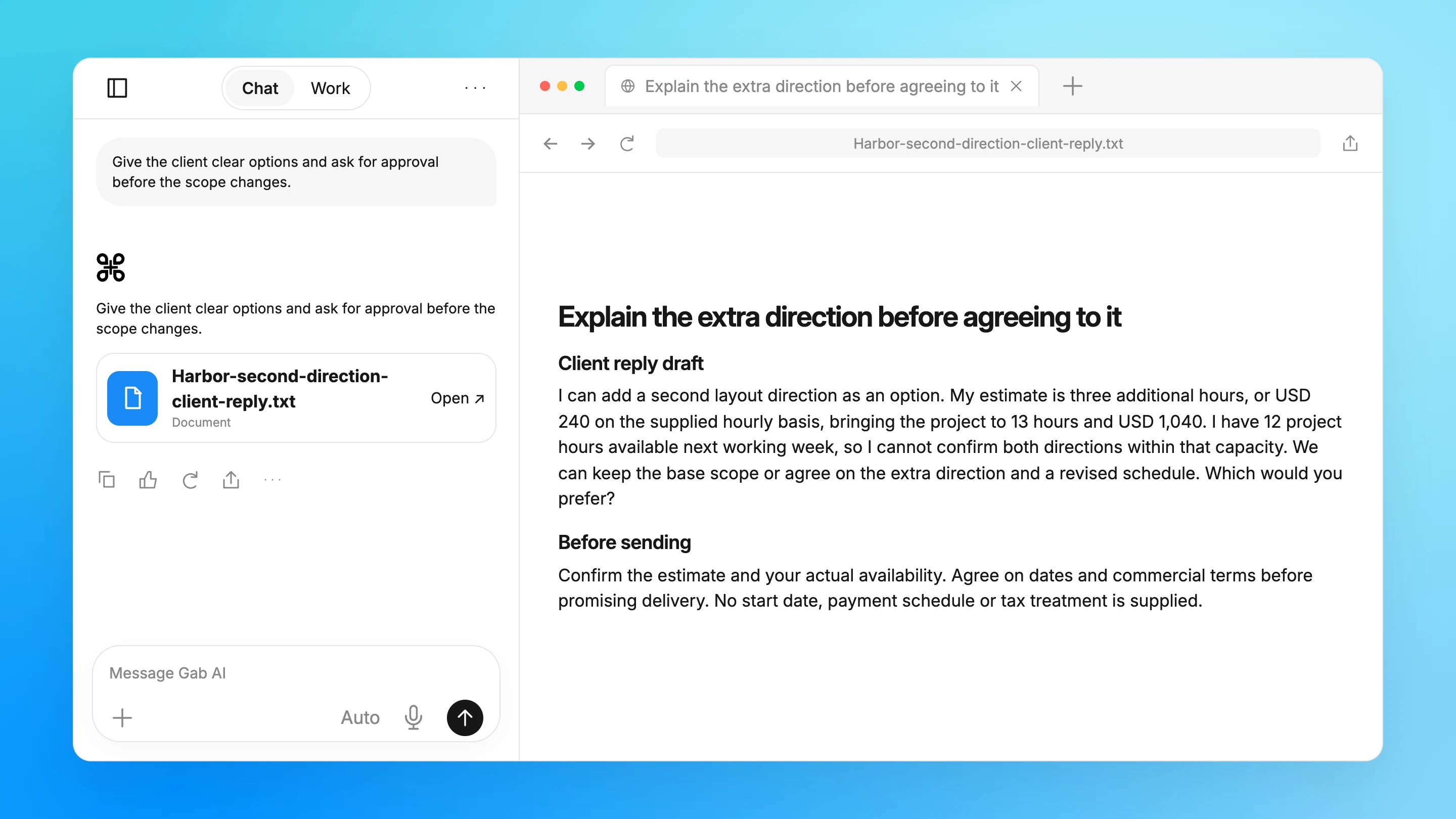
Give the client clear options and ask for approval before the scope changes.
Give the client clear options and ask for approval before the scope changes.
Loading…
This content could not load.
Your source material stays available.
Explain the extra direction before agreeing to it
Client reply draft
I can add a second layout direction as an option. My estimate is three additional hours, or USD 240 on the supplied hourly basis, bringing the project to 13 hours and USD 1,040. I have 12 project hours available next working week, so I cannot confirm both directions within that capacity. We can keep the base scope or agree on the extra direction and a revised schedule. Which would you prefer?
Harbor-one-page-client-brief.txt
Harbor-one-page-effort-estimates.csv
Before sending
Confirm the estimate and your actual availability. Agree on dates and commercial terms before promising delivery. No start date, payment schedule or tax treatment is supplied.
Harbor-one-page-client-brief.txt
Harbor-one-page-effort-estimates.csv
A draft reply for the freelancer to review; no message is sent and no revised terms are accepted.
Harbor Studio requests one service-sheet layout using 500 words of client-supplied copy. The proposed scope includes a brief review, one layout direction and one consolidated revision round. Deliverables: an editable layout and a print PDF. Copywriting, illustration, additional directions, printing and extra revision rounds are excluded.
Supplied commercial assumptions
The freelancer supplies an hourly estimate basis of USD 80 and 12 available project hours in the next working week. These are personal assumptions, not market rates. No start date, delivery date, payment schedule, tax treatment, acceptance deadline or accepted agreement is supplied.
Client change request
The client asks for a second layout direction. The freelancer estimates three additional hours at the same USD 80 hourly basis. This option has not been accepted. The client asks whether it can still fit the same week. No extra capacity has been approved.
Harbor-one-page-effort-estimates.csv
Base estimate
Brief review: 2 hours. First layout direction: 6 hours. One consolidated revision round: 2 hours. Base estimated effort is 10 hours. Each uses the supplied USD 80 hourly basis.
Optional direction estimate
Second layout direction: 3 additional hours at USD 80 per hour. It is optional work requiring approval; it is not part of the base scope.
Capacity and missing costs
Available project capacity is 12 hours in the next working week. Capacity is not a delivery-date commitment. Actual time, expenses, overhead and taxes are unknown; the estimate does not establish profit.
About these examples
Write proposals, estimate effort and explain scope changes
Open an example to inspect the prompt, sample inputs and completed result.
A useful result, with the details behind it
Turn a client brief into a scoped proposal
Inspect what is included, what is excluded and how an extra direction changes the estimate.
Add the client brief, deliverables, estimate basis and availability before sending.
Read all source material
Harbor-one-page-client-brief.txt
Requested deliverables
Harbor Studio requests one service-sheet layout using 500 words of client-supplied copy. The proposed scope includes a brief review, one layout direction and one consolidated revision round. Deliverables: an editable layout and a print PDF. Copywriting, illustration, additional directions, printing and extra revision rounds are excluded.
Supplied commercial assumptions
The freelancer supplies an hourly estimate basis of USD 80 and 12 available project hours in the next working week. These are personal assumptions, not market rates. No start date, delivery date, payment schedule, tax treatment, acceptance deadline or accepted agreement is supplied.
Client change request
The client asks for a second layout direction. The freelancer estimates three additional hours at the same USD 80 hourly basis. This option has not been accepted. The client asks whether it can still fit the same week. No extra capacity has been approved.
Harbor-one-page-effort-estimates.csv
Base estimate
Brief review: 2 hours. First layout direction: 6 hours. One consolidated revision round: 2 hours. Base estimated effort is 10 hours. Each uses the supplied USD 80 hourly basis.
Optional direction estimate
Second layout direction: 3 additional hours at USD 80 per hour. It is optional work requiring approval; it is not part of the base scope.
Capacity and missing costs
Available project capacity is 12 hours in the next working week. Capacity is not a delivery-date commitment. Actual time, expenses, overhead and taxes are unknown; the estimate does not establish profit.
Draft a freelance proposal
Inspect what is included, what is excluded and how an extra direction changes the estimate.
Refine project estimates and proposal scope
Compare the draft with a focused revision, keeping the source facts in view.
Try one focused revision
Suggested follow-up using the same source facts.
Focused follow-up
What change should I ask for?
Condense the scope for a client. Preserve the 500 words, single layout, one direction and one consolidated revision; keep formats proposed rather than delivered.
Original excerpt
What does the existing example say?
One service-sheet layout from 500 words of supplied copy, one direction and one consolidated revision round. Proposed delivery formats are an editable layout and print PDF. The sample file is the scope proposal, not those final client assets.
Suggested revision
What could that revision look like?
The proposed scope is one service-sheet layout using 500 words of supplied copy, one direction and one consolidated revision round. An editable layout and print PDF are proposed delivery formats; this scope proposal is not the final client artwork.
Follow the amounts back to the supplied effort and rate.
Where does USD 800 come from?
Base estimate The base tasks total 2 + 6 + 2 = 10 estimated hours. The supplied USD 80 hourly basis gives USD 800. Actual time and profit are not established.
Does the second direction fit the same capacity?
Extra direction No. The option adds three hours: 10 + 3 = 13 hours against 12 available project hours. It needs a revised schedule or scope, not an automatic delivery promise.
Read the boundaries before treating the draft as an agreement.
Does the base include copywriting or printing?
Scope boundaries No. The brief supplies 500 words and excludes copywriting, illustration, printing, additional directions and extra revision rounds.
Has the client accepted a price or delivery date?
Unagreed terms No accepted agreement, start date, delivery date, payment schedule, tax treatment or acceptance deadline is supplied. Changing the preview accepts none of these.
Use Chat to discuss the request and refine the result with follow-up questions.
Deliverable: Proposal draft
What to provide
Client brief, your actual services, rates and availability
Example prompt
Draft a proposal from this client brief and my stated services, rates and availability. Separate deliverables, assumptions, exclusions and questions; do not invent credentials, guarantees or agreement to the client's terms.
What to check
Confirm scope and assumptions
Check rates and contract wording
Approve client communications
Work
Turn a client brief into a scoped proposal
Inspect what is included, what is excluded and how an extra direction changes the estimate.
Use Work to create and revise the named file from the supplied sources.
Deliverable: Harbor-one-page-scope-proposal.html
What to provide
Harbor-one-page-client-brief.txt
Harbor-one-page-effort-estimates.csv
Example prompt
Create Harbor-one-page-scope-proposal.html from Harbor-one-page-client-brief.txt and Harbor-one-page-effort-estimates.csv. Make an inspectable proposal with Base and Extra direction views. Preserve the supplied scope, one revision round and exclusions. Show 10 hours / USD 800 for the base and 13 hours / USD 1,040 with the option. Flag the one-hour capacity gap. Leave dates, payment, taxes and acceptance terms unresolved; do not accept an agreement.
What to check
Inspect the supplied sample files
Check the result against your own sources
Review before sharing or acting
Work
Check the effort behind the client estimate
Filter base and optional work, inspect the calculation and keep estimates separate from actual time.
Use Work to create and revise the named file from the supplied sources.
Deliverable: Harbor-one-page-effort-review.csv
What to provide
Harbor-one-page-client-brief.txt
Harbor-one-page-effort-estimates.csv
Example prompt
Create Harbor-one-page-effort-review.csv from Harbor-one-page-client-brief.txt and Harbor-one-page-effort-estimates.csv. Calculate each supplied task at USD 80 per hour. Keep base and optional work separate. Explain the 10-hour / USD 800 base and 13-hour / USD 1,040 option against 12 hours of weekly capacity. Do not infer actual time, profit, taxes or an accepted quote.
What to check
Inspect the supplied sample files
Check the result against your own sources
Review before sharing or acting
Chat
Respond to a change without promising extra capacity
Give the client clear options and ask for approval before the scope changes.
Using Harbor-one-page-client-brief.txt and Harbor-one-page-effort-estimates.csv, draft a client reply about the second direction. State the extra three hours / USD 240 and the 13-hour total against 12 hours of capacity. Offer the base scope or an approved option with a revised schedule. Do not invent dates or imply acceptance. Do not send the message.
What to check
Inspect the supplied sample files
Check the result against your own sources
Review before sharing or acting
More prompts
Chat
Explain a change request
A client reply describing the scope change and explicit options for approval.
Use Chat to discuss the request and refine the result with follow-up questions.
Deliverable: Change-request reply
What to provide
Original agreed scope, requested change and approved options
Example prompt
Draft a reply explaining how this change affects the agreed scope. Use only the impact and options I supply, distinguish estimates from commitments and ask for approval before additional work. Do not imply that new terms are already accepted.
What to check
Confirm scope and assumptions
Check rates and contract wording
Approve client communications
Work
Create a statement-of-work draft
An editable statement-of-work draft with supplied terms and unresolved acceptance or legal questions.
Use Work to build and revise Statement-of-work draft.docx from your source material.
Deliverable: Statement-of-work draft.docx
What to provide
Approved scope, deliverables, milestones and commercial terms
Example prompt
Create an editable scope document with deliverables, responsibilities, milestones, acceptance questions and exclusions from the terms I provide. Flag legal clauses for qualified review and do not invent binding terms or present the document as legal advice. Deliver "Statement-of-work draft.docx" as the requested editable artifact. Ask for missing source material rather than inventing facts.
What to check
Confirm scope and assumptions
Check rates and contract wording
Approve client communications
Work
Build a project effort workbook
An effort and cost workbook with transparent calculations and separate estimates and actuals.
Use Work to build and revise Project effort workbook.xlsx from your source material.
Deliverable: Project effort workbook.xlsx
What to provide
Task estimates, capacity, rates and approved budget assumptions
Example prompt
Build a workbook of tasks, estimated hours, rate basis, costs and capacity. Use formulas for totals, separate assumptions from actual time and show the effect of a supplied change scenario. Do not promise profitability or future utilization. Deliver "Project effort workbook.xlsx" as the requested editable artifact. Ask for missing source material rather than inventing facts.
Questions about Gab Super Intelligence for freelancers
Can Gab AI help create a freelance proposal from a client brief?
Supply the brief, deliverables, exclusions, revision rounds, estimate basis and availability. Ask Work for a proposal that keeps unknown terms visible. The sample has Base and Extra direction views; neither accepts an agreement.
Can I compare a scope change with my available hours?
Yes. Supply task estimates and capacity. Here the base is 10 hours and USD 800; the second direction brings it to 13 hours and USD 1,040 against 12 available hours. These are estimates, not tracked time or profit.
Can it draft a reply about extra work?
Ask Chat to explain the supplied impact, offer clear options and request approval. Check the wording and your actual capacity before sending. The example action opens a draft.
What should I include in a freelance project brief?
Include the deliverables, approved source material, proposed formats, revision rounds, estimate basis and capacity. Separate agreed terms from the questions still awaiting a client decision. The example uses a brief.
When does a draft proposal become agreed client scope?
Confirm deliverables, assumptions, timing, price and revision terms through your usual client approval process. The example proposes one layout from 500 supplied words, one direction and one consolidated revision round. Generating the proposal does not accept those terms or produce the final client assets.
Can I start in Chat, or do I need Work?
Use Chat for questions and text drafts. Choose Work when you want a project with tools and editable files. Work requires Plus and uses credits; see Pricing for plans and allowances. Opening a draft does not send it or attach the example files.